Analyzation

Busbar Precision

Copper Busbar Model

The design and development of copper busbars for Gas Insulated Switchgear (GIS) are based on the required current ratings such as 630 A, 1250 A, and 2500 A. In addition to current capacity, key electrical and mechanical factors— including skin effect, dielectric clearances, and permissible temperature rise—are carefully evaluated. Based on these parameters, the busbar configuration is optimized using either a single run or a double run arrangement.

The design also evaluates thermal performance, mechanical strength, electrical conductivity, insulation clearances, and space constraints to optimize busbar configurations, ensuring efficient current distribution and reliable GIS operation.

  • Current Rating
  • Busbar Design
  • Thermal Analysis
  • Dielectric Clearance
  • Skin Effect
  • Configuration Optimization

Structural Integrity

Pressure & Mechanical Load Simulation

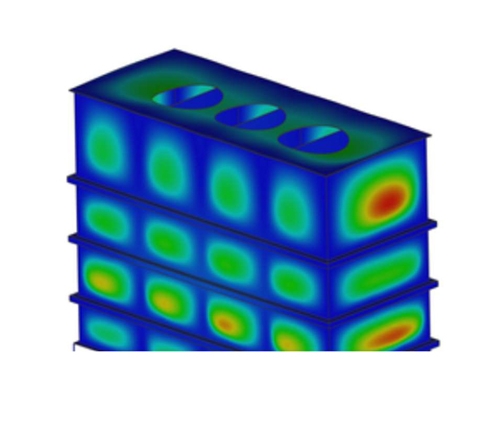
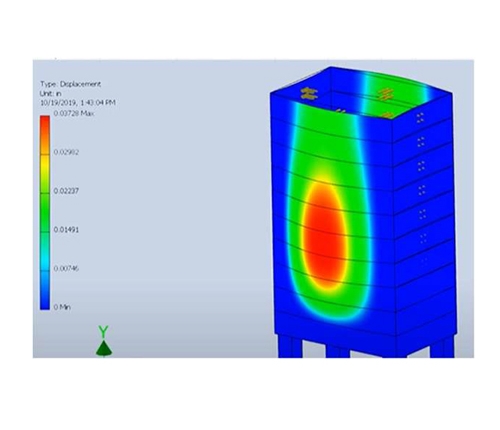
Pressure simulation of the gas tank is performed using Autodesk Inventor to evaluate the structural integrity under internal pressure. The analysis helps determine the optimum material thickness, the required number of stiffeners, and the maximum allowable pressure the gas tank can safely withstand.

Mechanical load simulations are also carried out using Autodesk Inventor to assess the load-bearing capability of critical switchgear components, including disconnector parts, operating mechanism drive components, and other kinematic parts.

  • Pressure Analysis
  • Mechanical Loading
  • Structural Integrity
  • Material Optimization

Dielectric Precision

Dielectric Simulation

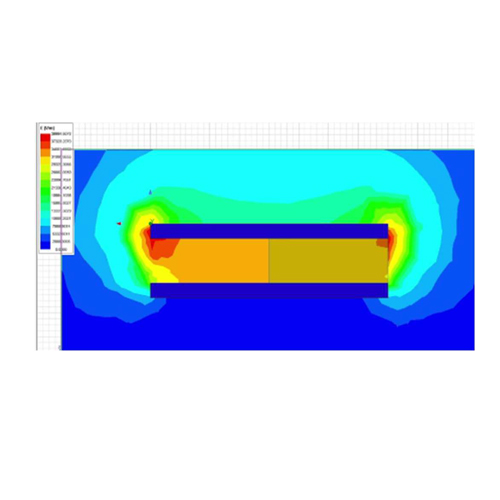
Dielectric simulations are performed using ANSYS to evaluate the electric field distribution within the switchgear. The simulation results are used to optimize the geometry of live and adjacent parts, define phase-to-phase and phase-to-earth clearances, and minimize electric field stress concentrations. The insulating medium—such as dry air or SF₆—and its operating pressure are also defined and validated through dielectric simulation to ensure compliance with insulation performance requirements.

These analyses help identify potential insulation weaknesses, improve electrical clearances, enhance operational safety, and support reliable switchgear performance under specified voltage and environmental conditions.

  • Electric Field
  • Insulation Optimization
  • Clearance Validation
  • Stress Reduction
  • Dielectric Analysis
  • Safety Compliance